
Strength Training During Perimenopause and Menopause
- TJ Martino

- Jan 24
- 4 min read
Key Takeaways
Strength training is essential during perimenopause and menopause, helping preserve muscle, support bone density, and improve metabolic health despite hormonal changes.
Smart, progressive training beats doing more. Results come from appropriate loading, consistency, and recovery, not exhaustion.
Individualized programs drive better outcomes. Meeting women where they are leads to safer progression, better adherence, and long-term confidence in movement.

A growing body of research shows that resistance training during perimenopause and menopause leads to meaningful improvements in multiple systems that tend to decline with hormonal changes.
Strength training has been shown to:
Preserve and increase lean muscle mass, which supports metabolism and daily function
Improve bone mineral density or slow bone loss, particularly at the hip and spine
Improve insulin sensitivity and glucose control
Reduce visceral fat and support healthier body composition
Improve strength, balance, and coordination, lowering fall risk
Support mood, confidence, and overall quality of life
Importantly, many studies show that these benefits occur even when hormone levels are changing or declining. Strength training does not require “perfect hormones” to work. It works by providing a mechanical stimulus that the body adapts to, regardless of age.
This is why women who lift regularly often feel stronger, more resilient, and more capable in daily life, even when other symptoms are present.
Why Muscle and Bone Matter More Than Ever
Two of the most significant physiological changes during menopause are the accelerated loss of muscle mass and bone density.
Muscle is not just for strength. It is a metabolically active tissue that helps regulate blood sugar, protects joints, and supports posture and movement. Loss of muscle makes daily tasks harder and increases injury risk.
Bone responds directly to load. Without sufficient mechanical stress, bone density declines. Walking and general activity are beneficial for cardiovascular health, but they do not consistently provide enough stimulus to preserve bone density in higher-risk areas.
Strength training provides both the muscle tension and skeletal loading required to signal adaptation.
This is not about lifting heavy for the sake of it. It is about loading tissues in a way that the body recognizes as a reason to maintain and rebuild.
Types of Strength Training That Are Most Effective
Not all strength training is the same, and more is not always better.
The research consistently supports a few key principles.
Progressive resistance matters.
Exercises need to be challenging enough to create adaptation. This can mean increasing load, improving control, increasing volume, or progressing complexity over time.
Compound movements are valuable.
Squats, hinges, presses, pulls, carries, and lunges load multiple joints and muscle groups and translate well to real-world strength.
Intensity should be appropriate, not maximal.
Training does not need to be maximal or exhausting to be effective. Consistency and progression matter more than pushing to failure.
Recovery is part of the program.
As recovery capacity can change during this phase of life, programming must account for sleep, stress, and overall load.
This is where many generic programs fall short. They apply a one-size-fits-all approach that does not account for individual capacity or history.
How Strength Training Compares to Other Forms of Exercise
Cardiovascular training, yoga, Pilates, and group fitness classes all have value. They support heart health, mobility, stress management, and community.
However, when it comes to preserving muscle and bone, improving metabolic health, and maintaining long-term independence, strength training stands apart.
Cardio alone does not sufficiently preserve muscle or bone.
Yoga and Pilates improve mobility and control but do not provide enough loading for bone adaptation.
High-intensity group classes can be effective for some but often lack progression and individualization.
The most effective approach is building a foundation of strength and layering other activities on top of it.
Why EVO Takes an Individualized Approach
This is where philosophy meets practice.
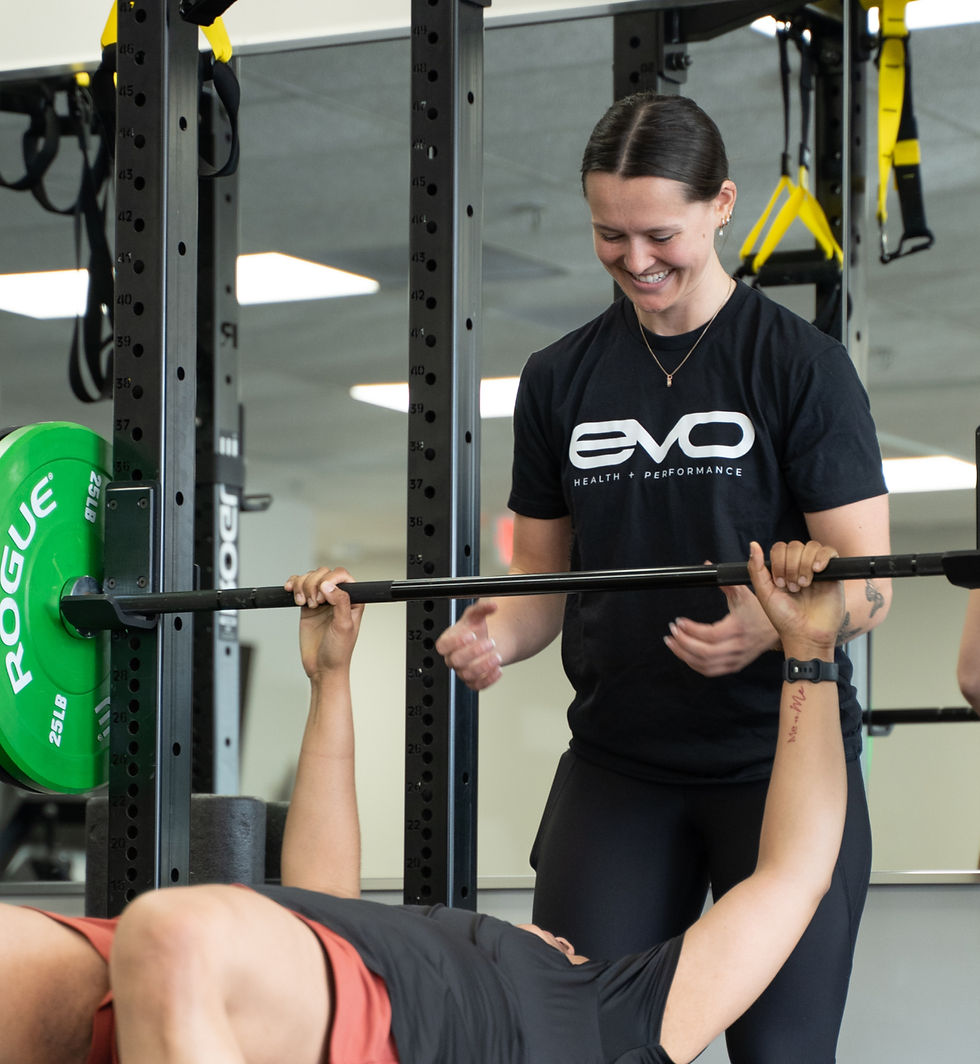
At EVO Health + Performance, we do not believe in forcing people into programs that look good on paper but fail in real life. We meet people where they are, physically, hormonally, and emotionally.
Every woman comes in with a different history.
Some are returning to training after years away.
Some are dealing with joint pain or previous injuries.
Some are navigating fatigue, poor sleep, or high stress.
Some are already active but frustrated that their body no longer responds the way it used to.
An individualized approach allows us to:
Assess movement, strength, and capacity before prescribing load
Progress training at a pace that supports adaptation without burnout
Adjust volume and intensity based on recovery, stress, and symptoms
Build confidence and trust in the body, not fear or avoidance
This is not about doing less. It is about doing what is appropriate, consistently, and intelligently.
When training is individualized, women stop feeling broken and start feeling capable again.
Strength Training as Long-Term Healthcare
Strength training during perimenopause and menopause is not about aesthetics or short-term fixes. It is about building a reserve.
A reserve of strength.
A reserve of bone density.
A reserve of confidence and resilience.
This phase of life is not the beginning of decline. It can be the beginning of a smarter, more intentional approach to health that supports the decades ahead.
When strength training is applied with intention and individualized care, it becomes one of the most effective forms of proactive healthcare available.
If you want to learn more about how we apply this approach and what it can look like for you, we will be diving deeper into these topics at our upcoming Women’s Health Seminar.

Comments