
Strength Training for Beginners: A Complete Guide
- Kyle Carney
- Nov 22, 2025
- 5 min read

Key Takeaways
Strength training is about more than just building muscle; it improves bone density, boosts metabolism, enhances mental health, and reduces the risk of chronic diseases.
Beginners should start with foundational exercises like squats, push-ups, and planks, focusing on proper form before adding weight or increasing reps.
Consistency is crucial for progress. A structured, progressive plan and the guidance of a professional can ensure safe and effective results.
Starting a new fitness routine can feel overwhelming, especially when it comes to strength training. Walk into any gym, and you're met with a vast array of weights, machines, and people who seem to know exactly what they're doing. It’s easy to feel intimidated and unsure of where to even begin.
This guide is here to change that. We'll break down everything you need to know to start your strength training journey with confidence. You'll learn about its incredible benefits, the fundamental exercises to build your foundation, and how to create a simple yet effective routine. We’ll also share practical tips to keep you safe and motivated. By the end, you’ll have a clear roadmap to building strength, improving your health, and feeling empowered in the gym.

Why Strength Training?
Strength training, also known as resistance or weight training, involves using resistance to induce muscular contraction, which builds strength, anaerobic endurance, and the size of skeletal muscles. But its benefits extend far beyond getting bigger muscles.
Build and Maintain Muscle Mass
As we age, we naturally lose muscle mass in a process called sarcopenia. Strength training is the most effective way to counteract this, helping you maintain a strong, functional body throughout your life. For beginners, the initial gains can be rapid and incredibly motivating.
Increase Bone Density
Lifting weights puts stress on your bones, signaling your body to build them up stronger and denser. This is a powerful defense against osteoporosis, a condition that makes bones brittle and more susceptible to fractures.
Boost Your Metabolism
Muscle is more metabolically active than fat. This means the more muscle you have, the more calories your body burns at rest. A consistent strength training routine can turn your body into a more efficient calorie-burning machine, making it easier to manage your weight.
Enhance Mental Health
Exercise, in general, is a known mood booster, but strength training offers unique psychological benefits. The sense of accomplishment from lifting a heavier weight or mastering a new exercise can significantly boost self-esteem and confidence. It’s also a great way to relieve stress and improve sleep quality.
Getting Started: The Basic Principles
Before you pick up your first dumbbell, it's important to understand a few core principles that will guide your training and ensure you get the best results safely.
Progressive Overload
This is the cornerstone of all strength training. To get stronger, you must continually challenge your muscles by gradually increasing the demand placed on them. This can be done by:
Increasing the weight you lift.
Increasing the number of repetitions (reps) or sets.
Decreasing your rest time between sets.
Improving your form and range of motion.
Consistency Over Intensity
Showing up consistently is more important than having one killer workout and then taking two weeks off. Aim for 2-3 strength training sessions per week to allow your body to adapt and grow stronger. Rest and recovery are just as important as the workout itself.
Form First
Proper form is non-negotiable. Using the correct technique not only prevents injury but also ensures you're targeting the intended muscles. It’s always better to lift a lighter weight with perfect form than to ego-lift a heavier weight with poor form. Consider recording yourself or working with a professional to check your technique.
6 Foundational Exercises for Beginners
You don’t need complex exercises to build a strong foundation. These six movements work multiple muscle groups, giving you the most bang for your buck. Start with just your body weight to master the form before adding resistance.
1. The Squat
The squat is the king of lower-body exercises, targeting your quadriceps, hamstrings, and glutes.
How to do it: Stand with your feet shoulder-width apart. Keeping your chest up and back straight, lower your hips as if you're sitting in a chair. Go as low as you comfortably can, aiming to get your thighs parallel to the floor, then push through your heels to return to the starting position.
2. The Push-Up
A classic upper-body exercise that works your chest, shoulders, and triceps.
How to do it: Start in a high plank position with your hands slightly wider than your shoulders. Lower your body until your chest nearly touches the floor, keeping your body in a straight line. Push back up to the starting position. If this is too challenging, start with push-ups on your knees.
3. The Plank
The plank is an excellent core-strengthening exercise that targets your entire midsection.
How to do it: Hold a push-up position, either on your hands or forearms. Engage your core and glutes to keep your body in a straight line from your head to your heels. Hold for as long as you can while maintaining good form.
4. The Dumbbell Row
This move strengthens your back, shoulders, and biceps.
How to do it: Place one knee and hand on a bench. Hold a dumbbell in the opposite hand with your arm extended. Pull the dumbbell up towards your chest, squeezing your back muscles. Lower it back down with control.
5. The Overhead Press
This exercise builds strong shoulders and triceps.
How to do it: Sit or stand holding a dumbbell in each hand at shoulder height, palms facing forward. Press the dumbbells overhead until your arms are fully extended, without locking your elbows. Lower them back to the starting position.
6. The Glute Bridge
An effective exercise for activating and strengthening your glutes and hamstrings.
How to do it: Lie on your back with your knees bent and feet flat on the floor. Lift your hips off the floor until your body forms a straight line from your shoulders to your knees.
Squeeze your glutes at the top, then lower back down.
Your First Strength Training Workout
Ready to put it all together? Here is a simple, full-body workout you can do twice a week on non-consecutive days.
Squats: 3 sets of 8-12 reps
Push-Ups: 3 sets to failure (as many as you can with good form)
Dumbbell Rows: 3 sets of 8-12 reps per arm
Plank: 3 sets, hold for 30-60 seconds
Glute Bridges: 3 sets of 12-15 reps
Rest for 60-90 seconds between each set. As you get stronger, you can apply progressive overload by adding weight, doing more reps, or taking shorter rests.
Your Next Steps
Embarking on a strength training journey is one of the best decisions you can make for your long-term health. Remember to start slow, prioritize form, and stay consistent. The strength and confidence you build will extend far beyond the gym.
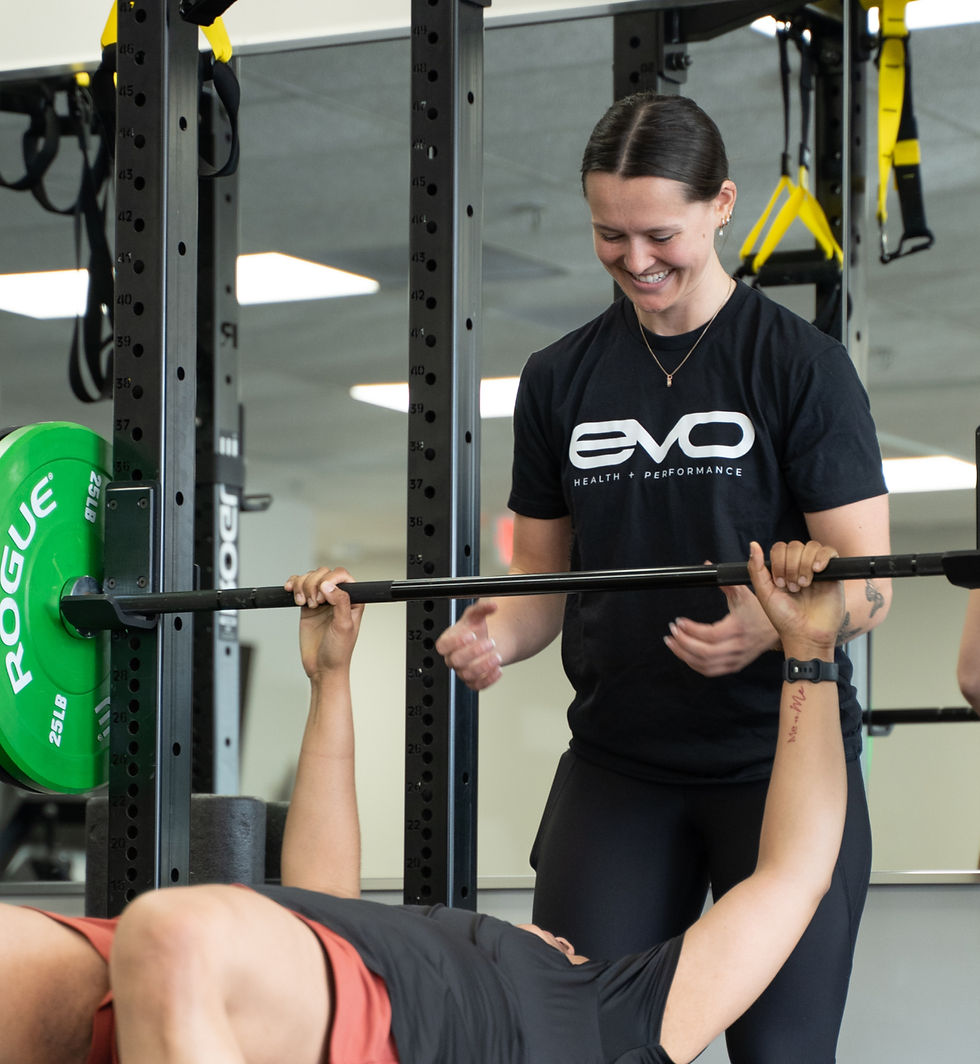
If you’re feeling unsure about your form or want a personalized plan to help you reach your goals, working with a professional can be a game-changer. A great Freehold Personal Trainer can provide the guidance and accountability you need to succeed.
At EVO Health + Performance, our expert coaches specialize in helping beginners build a strong, safe foundation. We are more than just a Personal Training Gym Freehold NJ—we are a community dedicated to supporting you every step of the way. Contact us today to learn how we can help you start your journey.

Comments