
Understanding Osteoarthritis: Why Your Joints Hurt and What You Can Do About It
- TJ Martino

- Sep 8, 2025
- 4 min read
Key Takeaways:
Osteoarthritis is less about “wear and tear” and more about uneven forces stressing your joints.
X-ray or MRI findings may sound intimidating, but often reflect natural aging or force distribution issues, not how much pain you actually feel.
Quick fixes like cortisone injections may provide short-term relief but can accelerate joint damage over time.
Physical therapy helps by creating space in the joint, teaching better movement patterns, building strength, and making simple daily adjustments.
What Is Osteoarthritis?
When people hear the word “arthritis,” they often picture a joint that is falling apart, doomed to get worse, and destined for surgery.
The truth is more hopeful than that.
Let’s break down what osteoarthritis really is, why it happens, and how physical therapy can help you move and feel better.
Osteoarthritis, or OA, is the most common type of arthritis. It is often described as “wear and tear,” but that phrase does not tell the whole story. At its core, OA is about how forces are distributed through your joints.
If one area of your joint is overloaded day after day, whether from the way you walk, an old injury, or simply not enough support from the muscles around the joint, it can lead to problems:
Less blood flow to the joint surface
Cartilage breakdown (cartilage is the smooth padding that protects your bones)
Extra bone growths called bone spurs, which can make the joint feel stiff and achy
All of this adds up to pain, swelling, and a feeling that the joint just does not move the way it used to.
What You Might See on an X-ray or MRI
Doctors often order imaging when you have knee or hip pain. These reports can sound intimidating, but here is what they really mean:
“Joint space narrowing” – This means the padding (cartilage) has worn down in spots. It does not mean the joint is truly “bone-on-bone.” It shows that one part of the joint is carrying too much load.
“Bone spurs” (osteophytes) – These are the bony growths your body creates in response to stress. Think of them like calluses on your skin. They are not always painful, and many people have them without even knowing.
“Degenerative changes” – This is medical shorthand for aging. Just like wrinkles on your skin, joints change over time.
The key takeaway: what you see on an x-ray or MRI does not always match how much pain you feel. Many people with scary-looking images have little to no pain at all. And for those who do have pain, treatment is about changing how forces move through the joint, not just about the image itself.
How Physical Therapy Can Help
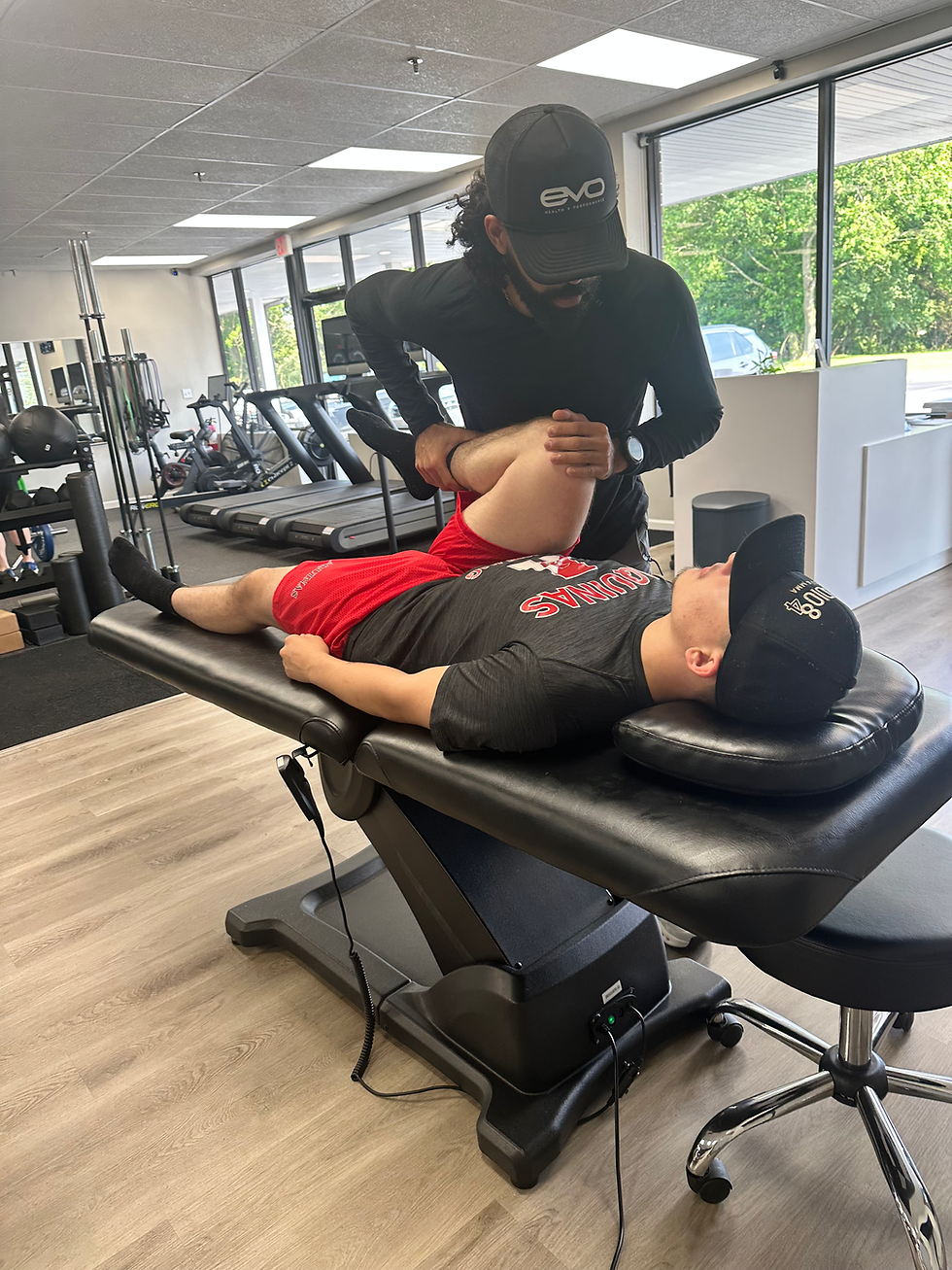
Unlike quick fixes, physical therapy is about teaching your body how to move differently so your joints are healthier in the long run.
Here is how we approach it:
Increase space in the joint: Certain movements and stretches can relieve pressure and help you feel more mobile.
Redistribute forces: By adjusting how you walk, squat, or climb stairs, we shift stress away from the overused part of the joint. A small change in foot position can make a big difference in how your knee feels.
Build strength and control: Muscles act like shock absorbers. When they are strong and coordinated, they take pressure off your joints. We train you to control this strength not only when you are fresh, but also when you are tired. That is when breakdowns usually happen.
Adjust daily activities: Sometimes the solution is as simple as changing the chair you sit in at work, adjusting your car seat, wearing different footwear, or even changing the position you sleep in. Small changes in your environment can take a lot of stress off your joints.
This is a process that takes time. It does not happen overnight, but with consistency you can expect less pain, more mobility, and greater confidence in your daily life.
Why Injections Are Not Always the Answer
Cortisone injections are a common recommendation. They reduce inflammation and can provide quick pain relief. But here is what research is showing:
Even a single injection can speed up cartilage breakdown compared to no injection.
People who get repeated cortisone injections are more likely to need joint replacement surgery sooner.
Side effects like weakening of tendons and bone loss can occur if injections are used too often.
That does not mean cortisone is always bad, but it does mean it is not a long-term solution. It treats symptoms, not the root cause.
Our 10-Step Roadmap to Recovery
At EVO, we do not believe in cookie-cutter rehab. Our 10-Step Process is designed to make sure nothing is skipped and every phase of recovery is covered. We start by calming pain, then progress to retraining how your joint moves, building strength, improving endurance, and ultimately restoring the freedom to do what you love.
The difference is that we do not stop at “feeling better.” We guide you until your body can handle real-life challenges like long walks, sports, or playing with your kids without falling back into pain.
The Bottom Line
Osteoarthritis does not have to mean giving up the things you love. Yes, your x-ray might show “degeneration,” and yes, the pain is real. But with the right approach, you can take control of your joints.
By improving how forces are distributed, building up your strength, making simple adjustments to daily activities, and sticking to a structured process, you can stay active, reduce pain, and slow the progression of arthritis.
Ready to learn how our approach can help your joints feel and function better?
Make sure to Book a Discovery Call today.


Comments