
Why You Shouldn’t Stop Moving After an Injury
- TJ Martino

- Oct 21, 2025
- 4 min read
Key Takeaways
Movement is medicine.
Pain is information, not a stop sign.
Training through pain, when done correctly, accelerates recovery.
Collaboration between rehab and performance is essential for long-term success.
You can almost always train safely with the right plan and support.
When something hurts, most people stop. They rest, wait, and hope the pain goes away on its own. But what we have seen time and time again is that complete rest rarely helps. In fact, it often slows recovery. The body was made to move, and when you stop moving entirely, everything that supports healing—your blood flow, your strength, and your coordination—starts to fade.
Pain does not always mean something is broken. More often, it means something is not moving the way it should. The answer is not to shut down training but to adjust it. The right kind of movement helps your body heal. It keeps your muscles active, your joints mobile, and your nervous system engaged. Training through pain, when done correctly, can make recovery faster and more complete.
At EVO, we look at pain as information. It tells us where to focus, not where to stop. It may mean reducing load, changing range of motion, or shifting to different exercises altogether. The goal is not to avoid effort but to find a version of training that keeps you progressing without making things worse.
How Training the Right Way Speeds Up Recovery
Training through pain only works when it is done intentionally. When the right movements are chosen and the right amount of load is applied, it can help tissues heal stronger than before. Controlled stress tells your body to adapt. It signals muscles to rebuild, joints to stay lubricated, and the nervous system to regain confidence in movement.
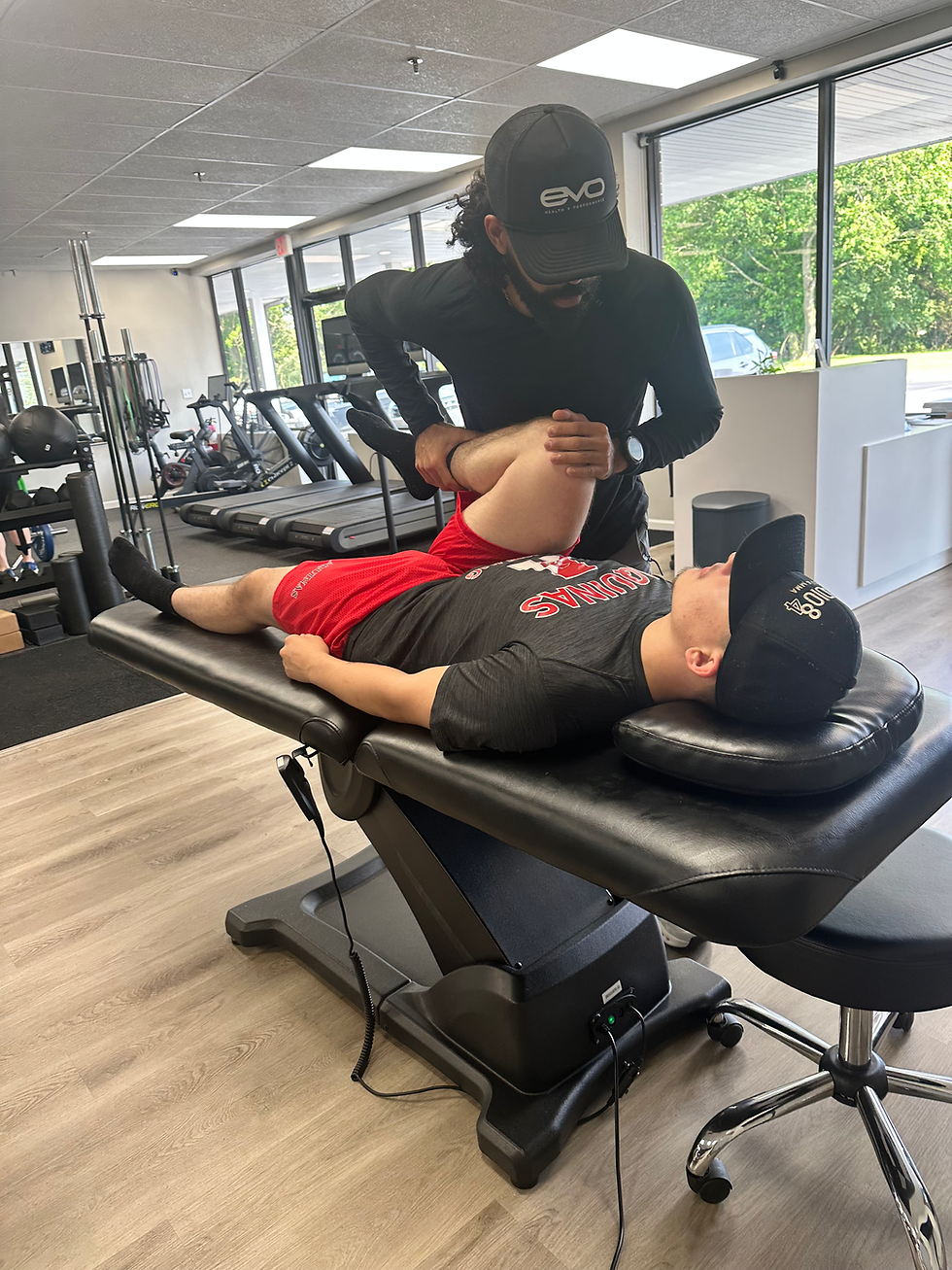
Our physical therapy team works closely with our performance coaches to guide this process. Each person’s program is designed to bridge the gap between rehab and training so that recovery does not mean sitting out. It means rebuilding in a smarter, more targeted way. This collaboration allows us to adjust programs in real time, ensuring that every session supports healing, not setbacks.
When this process is done right, training becomes part of recovery. It restores movement, reduces pain sensitivity, and rebuilds strength in the areas that need it most. Instead of losing momentum, you come out of the process stronger, more resilient, and more confident in your body.
A Real Story: How We Helped Carmine Get His Life Back
Carmine came to us after struggling with severe back pain that had taken him away from the things he loved, like training, hunting, fishing, and golfing. He had tried resting and waiting for it to get better, but every time he tried to return to activity, the pain came back.
Our physical therapy team started by rebuilding his foundation. We focused on improving his movement mechanics, strengthening the right areas, and re-educating his body on how to move efficiently without triggering pain. Once his pain decreased and his strength returned, our performance coaches worked with him to transition back into full training.
Today, Carmine is back doing everything he enjoys. He is training regularly, playing golf without hesitation, and spending weekends outdoors hunting and fishing. Most importantly, he is moving with confidence again. His story reminds us that pain does not have to be the end of the activities you love. It can be the beginning of rebuilding in a better, more sustainable way.
How to Stay Active While You Recover
Shift your mindset from rest to recovery.
Rest does not mean doing nothing. It means finding the right balance of activity that allows your body to rebuild. You can always work on something like mobility, breathing, core strength, or technique.
Train around the pain.
If your shoulder hurts, train your legs. If your knee is irritated, strengthen your upper body. There is almost always a safe way to move, and sometimes that movement even helps the painful area improve indirectly.
Slow down and focus on how you move.
Poor mechanics are often the reason pain sticks around. By improving control and awareness, you help the injury heal and prevent it from returning.
Take recovery seriously.
Sleep, nutrition, hydration, and recovery tools like sauna, cold plunge, and red light therapy play a major role in healing. They are not just extras. They are essential parts of the process.
Communicate and adjust.
Tell your coach or therapist what you are feeling and when. The smallest change in your plan can make a big difference, and staying connected ensures you are progressing safely.
The Bottom Line
Training through pain is not about pushing harder. It is about being smarter. The goal is to keep your body active, your mind confident, and your progress moving forward. At EVO, we do not tell you to stop. We help you move better, recover faster, and come back stronger than before.
If you are working through pain and not sure where to start, schedule a Discovery Visit at EVO Health + Performance.
Our team will assess what is going on, guide you through the right plan, and help you stay active while your body heals.


Comments