
You Were Told To Rest, But That Advice May Be Why You're Stuck
- TJ Martino

- Oct 28, 2025
- 3 min read

Key Takeaways
Rest alone rarely solves the problem. Without structure or guidance, extended rest often leads to more stiffness, weakness, and hesitation to move.
Rest followed by a sudden return to activity is a massive jump in workload. Going from “doing nothing” straight back to normal training or daily demands overwhelms tissues that are no longer prepared.
Your body needs the right movement to heal. Guided, progressive movement restores function, sends safety signals to the nervous system, and rebuilds strength.
When Simple Advice Becomes the Problem
A few months ago, we met someone who came in with lingering knee pain.
They followed the advice they were given.
They stopped training.
They rested.
They waited.
When the pain finally felt “manageable,” they jumped right back into their normal routine. Within weeks, their knee flared up again. But this time, something new showed up too. Hip tightness. Low back discomfort. A hamstring that suddenly felt strained.
They said something we hear all the time:
“I thought resting would fix it. Now I have more problems than I started with.”
If that sounds familiar, you are not alone.
Most people who walk through our doors have been told some version of the same thing.
Just rest.
Avoid anything that hurts.
Give it time.
It sounds simple, but it ignores what happens to the body during that time.
The Problem With Passive Care
Rest has a place in recovery. Your body needs time to heal.
The problem is when rest becomes the only plan, and the return to activity is treated like an on-off switch.
When you rest for weeks or months, your body does not stay the same. Strength declines. Tissues lose tolerance. Movement patterns change. Then, when you suddenly return to normal activity, the workload jumps dramatically.
That jump is often bigger than the original injury ever was.
This is why we rarely recommend resting and then “just going back to it.” It is a huge spike in volume and demand for a body that is no longer prepared.
And when that happens, the body adapts the only way it can. It compensates.
That is when pain starts showing up in places that feel unrelated to the original issue. The knee settles down, but the back flares up. The shoulder improves, but the neck becomes irritated. The original problem shifts instead of resolving.
What started as a short-term issue becomes a long-term pattern because there was no structured plan to rebuild capacity.
Why Movement Is Medicine, When Done Right
The goal of recovery is not rest or activity.
It is progression.
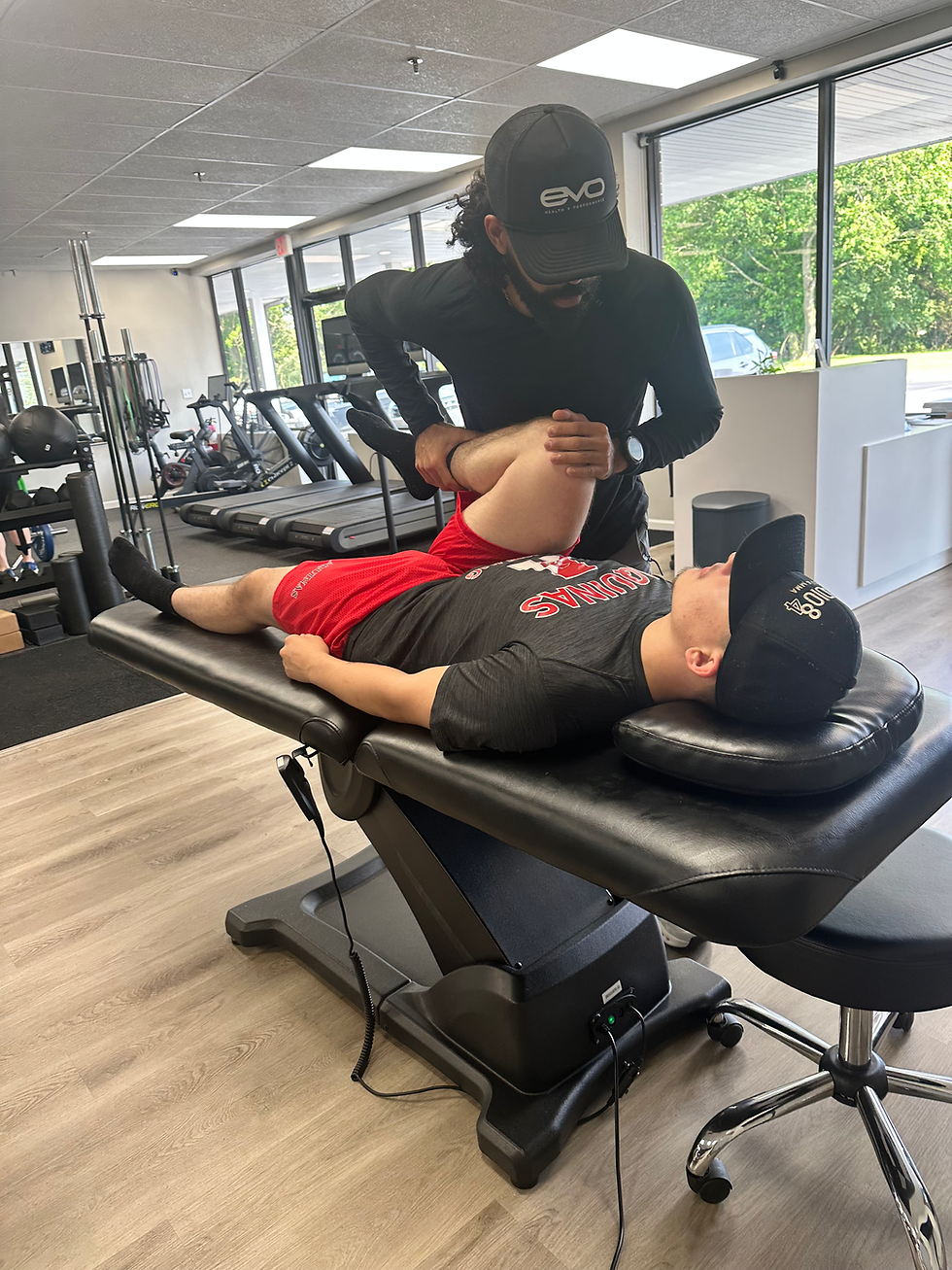
Guided, intentional, and progressive movement bridges the gap between injury and full return. It prepares tissues gradually, instead of shocking them all at once.
When movement is reintroduced the right way, it sends a clear message to your nervous system: this is safe. Pain sensitivity decreases. Strength returns. Coordination improves. Confidence builds.
This is what active recovery actually means.
Not pushing through pain.
Not avoiding movement.
But scaling activity appropriately and expanding capacity over time.
At EVO, we see this shift daily. People come in frustrated after resting for months. Within a few sessions, they are moving with less hesitation and more confidence. Not because we rushed them, but because we rebuilt them step by step.
How We Rebuild Confidence at EVO
Our process starts with listening.
We want to know what happened, what you tried, and how your body responded to rest, activity, and everything in between. From there, we build a plan that meets you exactly where you are.
Our 10-Step Recovery Process is designed to prevent the “rest then overload” cycle. We assess how you move today, rebuild foundational strength, and gradually expose your body to the demands of your life, work, or sport.
Each step has a purpose. Each progression is intentional.
The goal is not just to feel better today.
It is to make sure pain does not simply reappear somewhere else tomorrow.
What You Can Do Now
If you have been resting and then flaring up when you return to activity, it is time to change the approach.
Start here:
Get a movement assessment. You need to understand current capacity, not past ability.
Avoid the all-or-nothing cycle. Gradual progression beats sudden returns every time.
Find guidance that understands load and adaptation. Recovery should prepare you for life, not pause it.
The Reframe
Rest is not the enemy.
But it is not the solution either.
Your body does not need another restart.
It needs a plan that bridges the gap between rest and real life.
At EVO Health + Performance, we help people rebuild capacity the right way. We guide the return to movement so strength, confidence, and resilience increase together.
You do not have to rest your way out of pain.
You just need a plan that respects how the body actually adapts.
Book a Discovery Call today and let’s start rebuilding what’s been missing.


Comments